
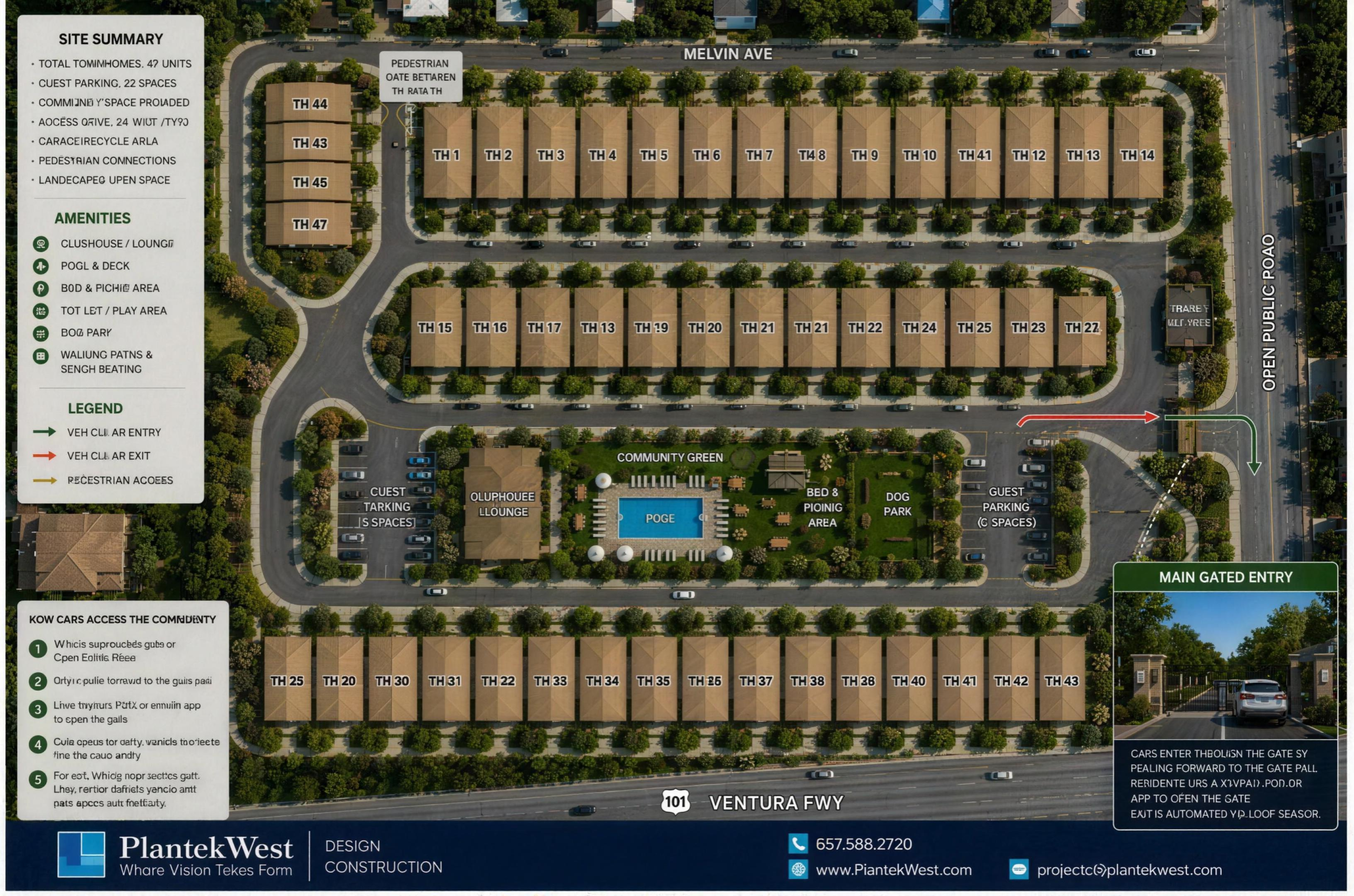
Commercial and development
Lot Subdivision, Lot Splits and Small-Lot Development
Splitting land is rarely a drafting exercise. Access, utility service, topography, existing structures and the map process decide whether a split is worth pursuing. We test that first, then run the approval route if the numbers hold.
What this covers
- SB 9 urban lot splits
- Small-lot subdivision
- Parcel and tract map process
- Access and easement strategy
- Utility service planning
- Post-split development options
How we run it
- 01
Split test
Eligibility, lot geometry, access and utilities checked against the rules.
- 02
Strategy
Map route, conditions and cost of compliance identified.
- 03
Submittal
Map and supporting studies prepared and carried through review.
- 04
Build out
Design, permitting and construction of the resulting parcels.
Questions people ask before hiring
Does an SB 9 lot split make financial sense on my property?
It depends on access to both new parcels, utility service routes, existing structures and what can then be built. The split itself creates no value unless the resulting parcels support a project. We test both together.
How long does a lot split take?
Ministerial SB 9 splits are faster than a conventional subdivision, but survey work, utility coordination and conditions of approval usually put the realistic range in months rather than weeks.